
Swimming Pools and Outdoor Spaces: Ideas for Enhancing a Masseria
Outdoor spaces are a fundamental part of a masseria in Puglia. Swimming pools, gardens, stone courtyards and relaxation areas can transform the spaces around the building into functional environments that integrate naturally with the surrounding landscape
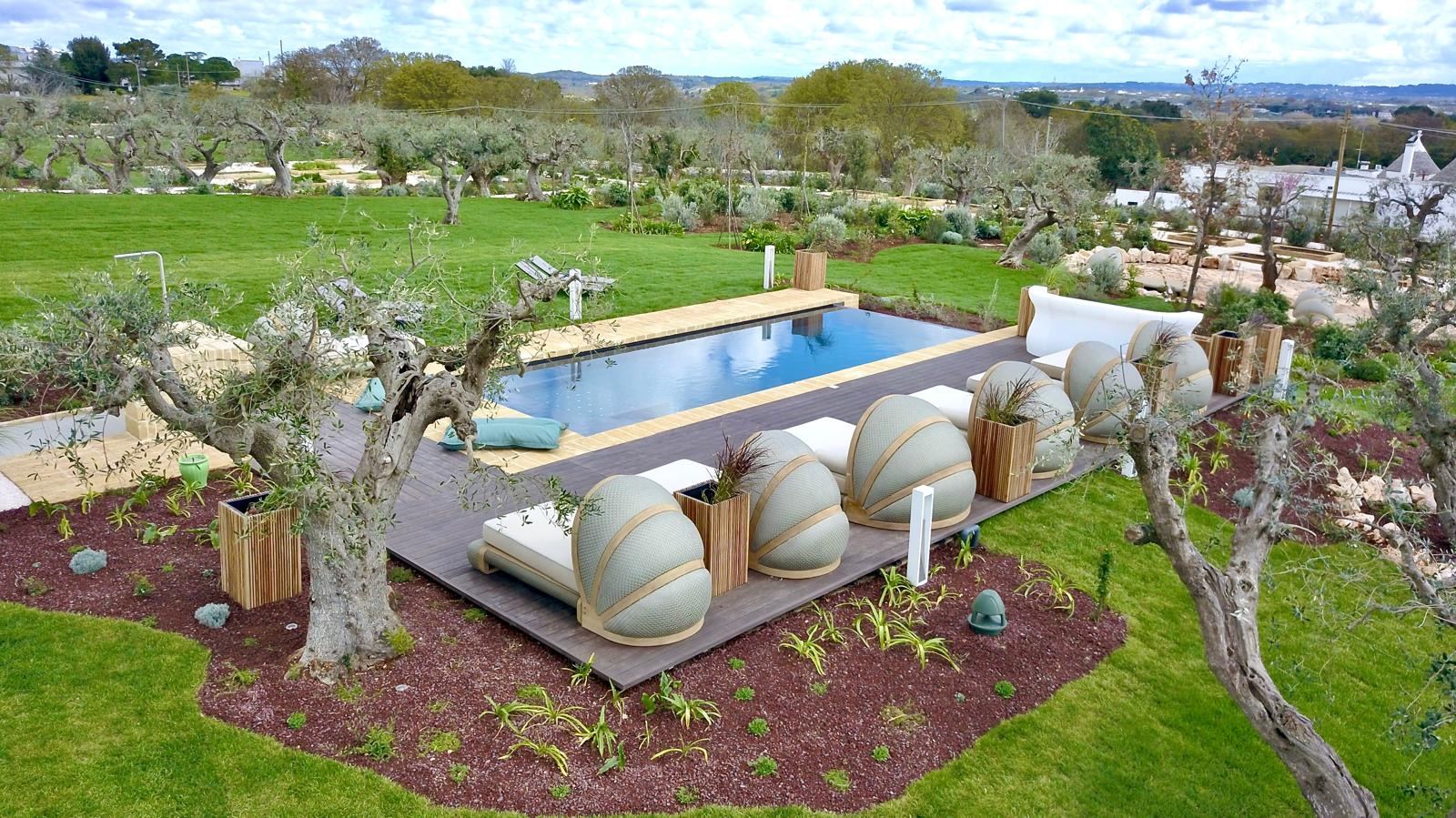
When renovating or restoring a masseria, the design of the outdoor areas should therefore be considered alongside the interior spaces, maintaining a coherent relationship with the existing architecture and the rural setting.
From swimming pools and Mediterranean gardens to wellness areas, there are many solutions that can enhance a masseria and make its outdoor spaces more enjoyable and functional.
1.Swimming pools immersed in the landscape
A swimming pool is often one of the elements that most strongly characterises the outdoor spaces of a masseria.
It can be designed using different solutions, depending on the characteristics of the land and the style of the property. An infinity pool, for example, can create an elegant effect and enhance views of the surrounding landscape.
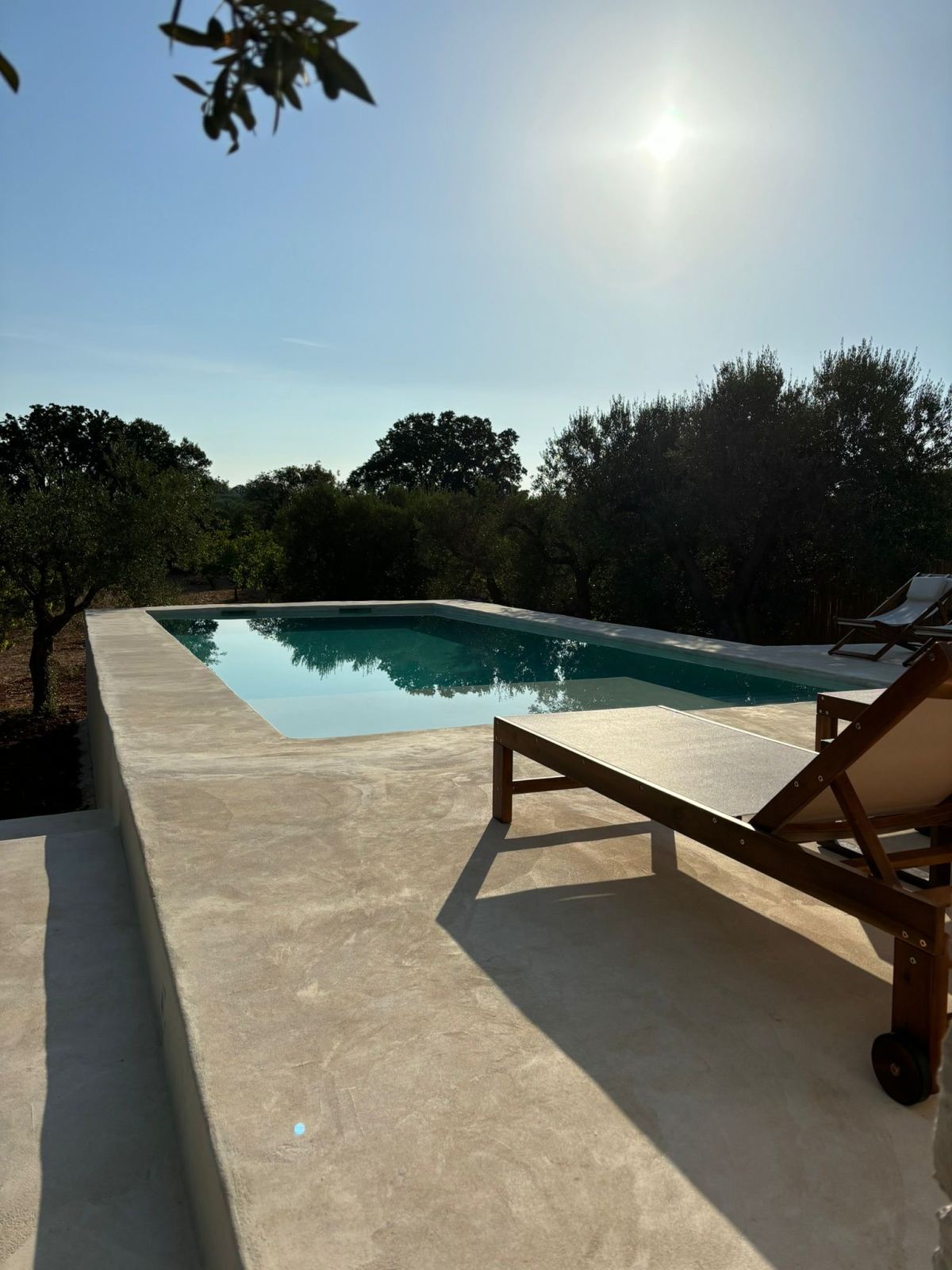
Another option is to use local stone for the pool finish, allowing it to blend naturally with the masseria and the surrounding rural environment.
A well-designed swimming pool can become the centre of outdoor life, both for private relaxation and for welcoming guests.
2.Gazebos and iron structures
Gazebos are a practical and versatile solution for creating shaded areas and spaces dedicated to socialising.
Iron structures provide durability and can add a contemporary element without contrasting with the traditional architecture of the masseria.
These spaces can be used for:
outdoor dining areas with tables;
outdoor sofas and lounges;
relaxation areas;
spaces dedicated to socialising.
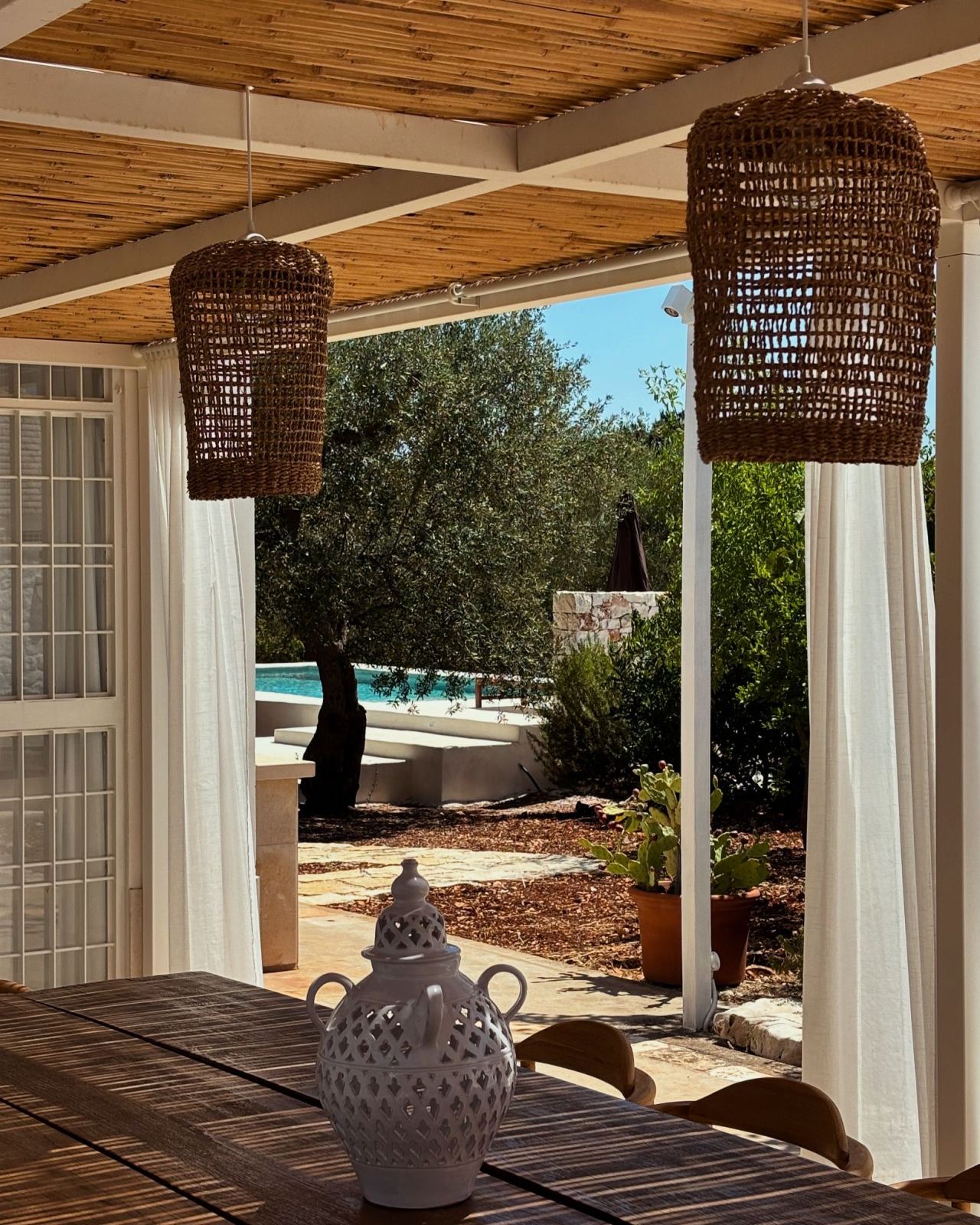
A well-designed structure makes it possible to use outdoor spaces more extensively and throughout different times of the day and year.
3.Gardens and green areas
A Mediterranean garden represents a natural extension of the masseria’s architecture and helps create continuity between the buildings and the surrounding landscape.
Centuries-old olive trees, fig trees, pomegranates and citrus trees can help preserve the characteristic identity of the Puglia region, while aromatic plants such as rosemary, lavender and sage can be used to decorate and scent pathways.
Green spaces can also be organised through:
lawns;
small stone pathways;
shaded areas;
flower beds with Mediterranean plants;
spaces dedicated to vegetable gardens and cultivation.
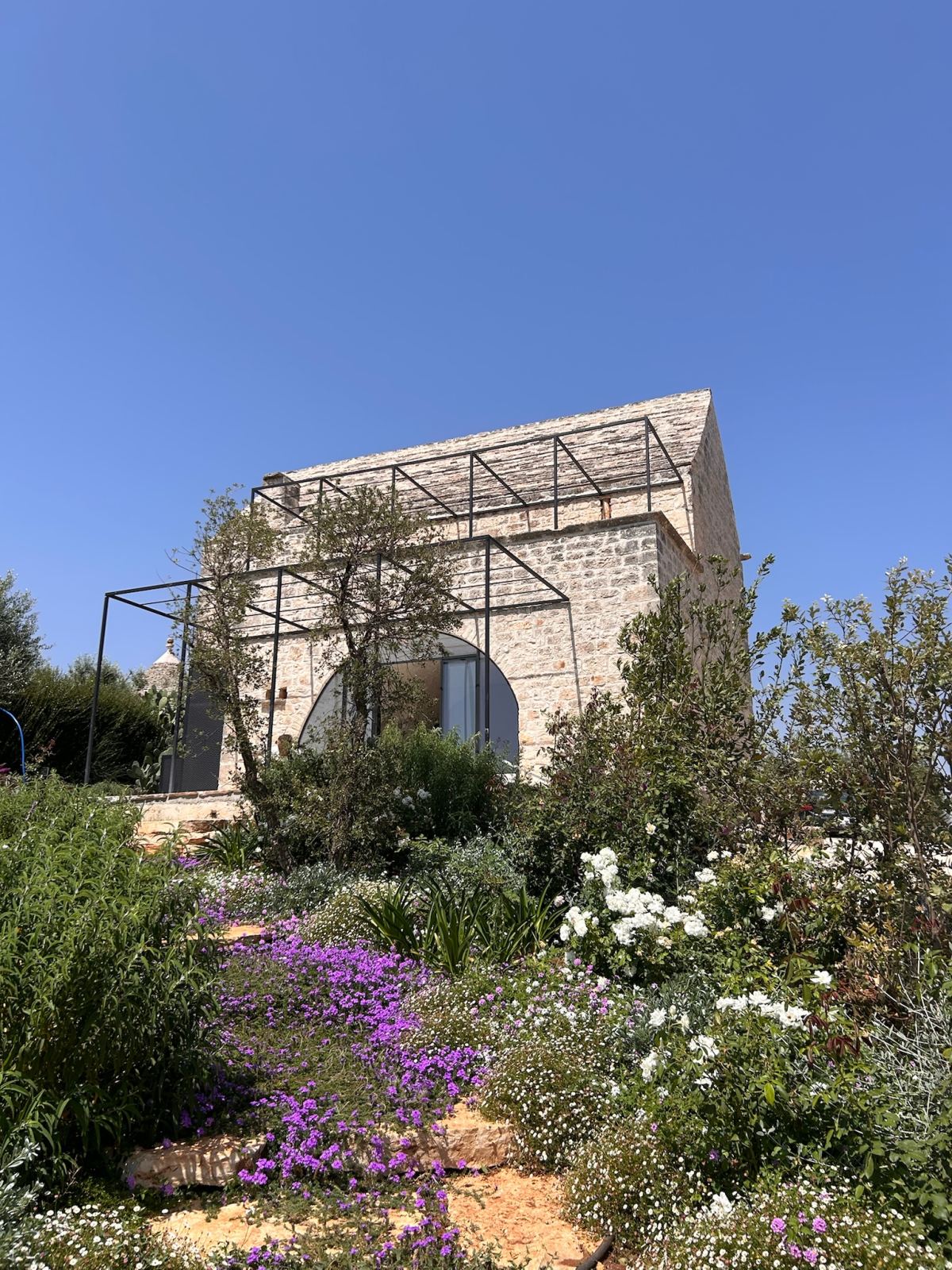
A well-designed garden is not simply a decorative element, but becomes a space to enjoy every day and a natural connection between the masseria’s interiors and the surrounding landscape.
4.Traditional stone yards and courtyards
Traditional farmyards, often paved with Chianche stone slabs or local stone paving, are among the most characteristic elements of rural architecture in Puglia.
Restoring or recreating these spaces helps preserve the connection with the history of the masseria while using materials that are consistent with those found in the original structure.
Courtyards and farmyards can also become functional spaces for different uses:
pathways;
relaxation areas;
outdoor dining;
socialising areas;
small play areas.
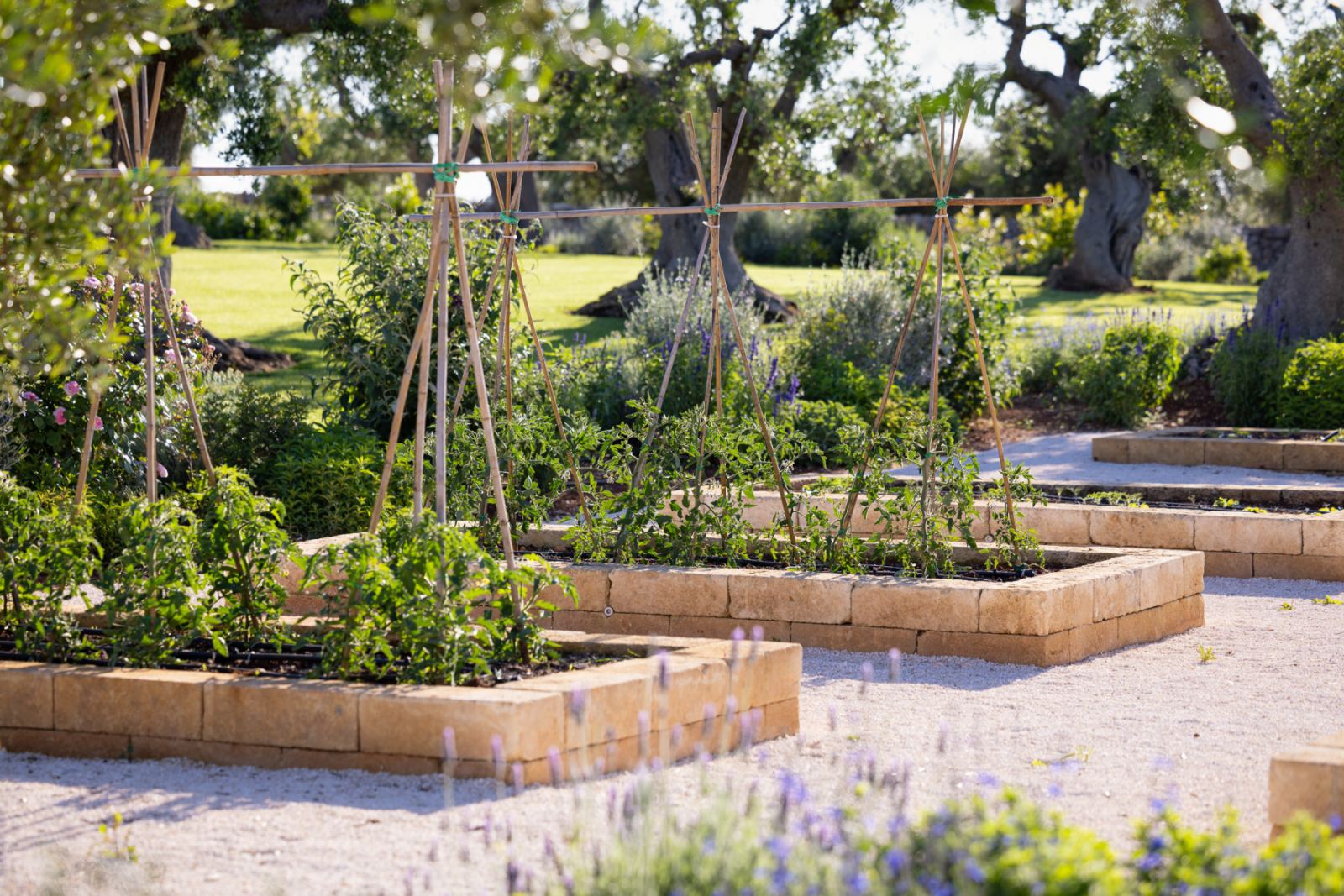
Stone therefore helps create visual continuity between the building, the outdoor spaces and the surrounding landscape.
5.Outdoor spas and wellness areas
Wellness areas are an increasingly popular solution when designing outdoor spaces for private masserias.
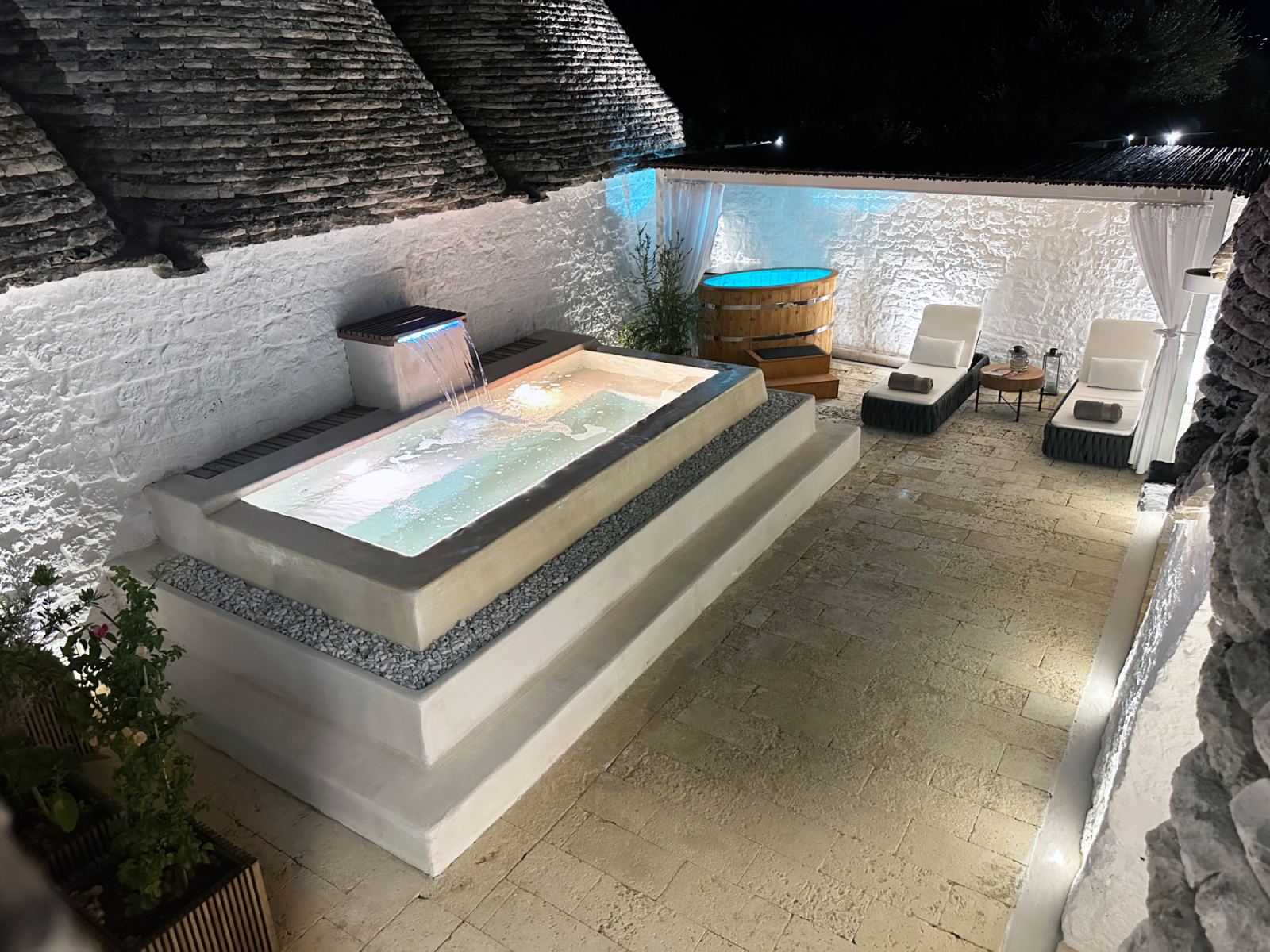
Depending on the size and characteristics of the property, it is possible to create:
outdoor hot tubs, which can be used throughout the year;
small spas integrated into annexes or enclosed gazebos;
stone sensory showers, particularly suitable for areas close to the swimming pool;
relaxation