
What to Check Before Buying a Historic Property in Puglia
Before buying a trullo or masseria to renovate, it is therefore important to carefully assess the condition of the property, the presence of any restrictions, the condition of the systems, the original materials and the potential restoration costs.
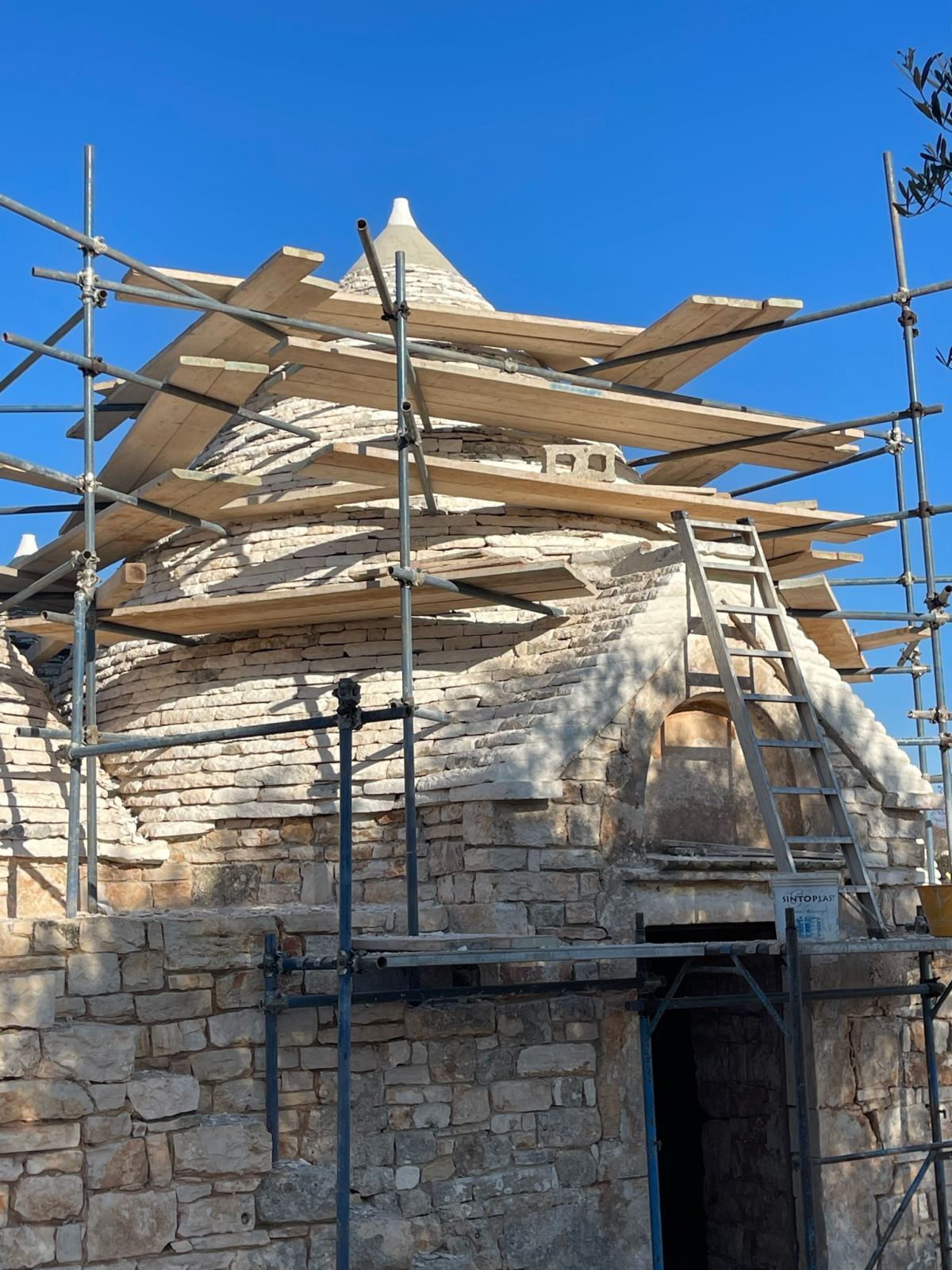
In this article, we look at what to check before buying a historic property and the main aspects to consider before transforming a traditional property into a home, accommodation facility or new project.
1.structural condition of the property
One of the first aspects to assess when buying a historic property is the structural condition of the building.
In the case of trulli and masserias, it is important to assess the condition of the foundations, the stability of load-bearing walls and the overall condition of the structure.
Particular attention should be paid to the presence of cracks, fractures or deformations in the masonry, which may indicate issues requiring further investigation before purchasing the property.
The roofs should also be carefully inspected. In trulli, for example, it is essential to check the condition of the stone cones, while masserias and lamias may feature barrel vaults, star vaults or other traditional structures that require specific assessment.
An inspection carried out by a qualified professional makes it possible to gather the information needed to assess the condition of the property and identify any structural work that may be required.
A construction company specialised in the restoration of trulli and masserias can also make an important contribution to assessing the necessary works and preparing a preliminary estimate of renovation costs, in coordination with the appointed professional.
2.restrictions and protection of cultural heritage
Before buying a historic property, it is essential to check for the presence of landscape, planning or cultural heritage restrictions.
Many trulli, masserias and other historic buildings in Puglia are located in areas subject to specific forms of protection.
The presence of a restriction can affect the type of work that can be carried out and, in some cases, require additional authorisations or the involvement of the relevant authorities.
This means that not every modification desired by the owner can be carried out freely.
Before purchasing the property, it is therefore important to know which parts of the building can be modified, which must be preserved and which authorisation procedures will be required.
Knowing these aspects in advance helps avoid purchasing a property with the expectation of carrying out works that may not actually be authorised.
3.systems and utilities
Another important aspect to check before purchasing concerns the systems and utilities available.
In historic properties, systems may be very old, no longer compliant with current standards or, in the case of ruins and buildings that have been abandoned for many years, completely absent.
It is therefore important to check the condition of the electrical, plumbing and sewage systems, as well as the availability and location of connections to the main utilities.
If existing systems need to be replaced or upgraded, these works should be included in the overall renovation budget.
The distance from public utility networks can also affect costs and the technical solutions required. In some rural properties, for example, specific solutions may be necessary for water management, wastewater treatment or energy supply.
For this reason, checking the utility situation before purchasing the property helps avoid unexpected costs during the renovation works.
4.damp and insulation
Buildings constructed several decades ago can often present issues related to damp and poor insulation.
During the inspection, it is therefore important to carefully check for mould, stains, water infiltration and signs of damp on walls and floors.
Particular attention should also be paid to the relationship between the building and the surrounding ground.
The presence of soil directly against the walls, differences in ground levels, inadequate drainage systems or possible cisterns and cavities beneath the floor level can contribute to damp problems and should be assessed during the inspection.
Thermal insulation should also be considered as part of the renovation project. Historic buildings can have very different characteristics from contemporary constructions and may require specific solutions to improve indoor comfort and energy efficiency.
5.original materials
One of the aspects that makes historic Puglian properties particularly interesting is the presence of traditional materials and construction techniques.
Chianche stone slabs, limestone paving, local stone, vaulted ceilings, stone lintels and wooden beams can represent elements of significant architectural value and should be carefully assessed before any work begins.
During the purchasing stage, it is therefore useful to identify which materials can be recovered and restored and which ones may need to be replaced.
Recovering original elements helps preserve the characteristics of the building and, where required by applicable protection regulations, may be necessary to comply with the property's conservation requirements.
For this reason, the renovation of a trullo or masseria requires knowledge of traditional construction techniques and the ability to work with materials that often need to be recovered, treated and reintegrated into the project.
6.restoration and maintenance costs
Before purchasing a historic property, it is essential to have a realistic estimate of the renovation and restoration costs.
Trulli, masserias and other traditional buildings may require specific interventions and specialised labour, particularly when work is needed on stone structures, cones, vaulted ceilings or original architectural elements.
Before completing the purchase, it is therefore advisable to request a preliminary estimate of the works, based on the condition of the property and the interventions planned.
The overall investment should include not only renovation works, but also systems, windows and doors, finishes, external works, any necessary authorisations and all the interventions required to complete the project.
It is also important to consider long-term maintenance. A historic property may require more specific inspections and maintenance than a modern building, particularly when it comes to roofs, stonework, waterproofing and other elements exposed to the weather.
Buying a historic property means connecting with tradition and preserving a piece of history. With a proper initial assessment, it can be transformed into a concrete, functional project designed to last over time.